
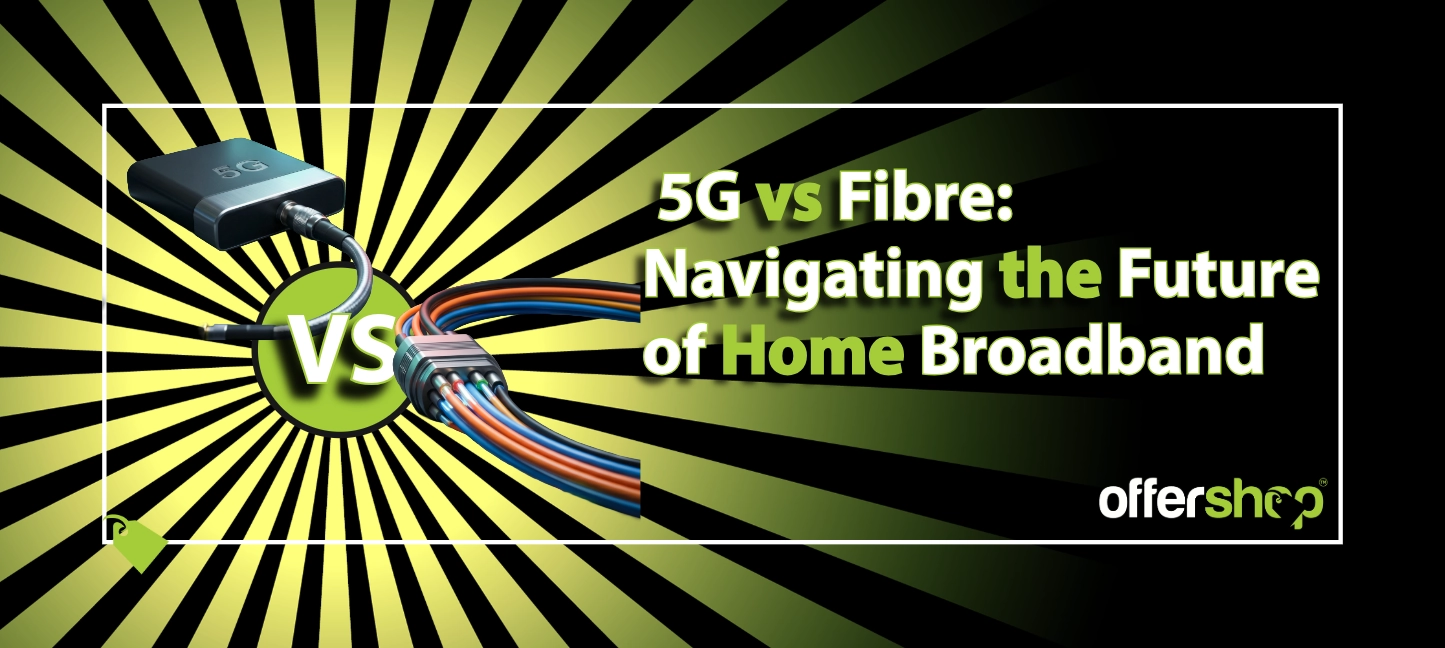
Navigating the Future of Home Broadband: 5G vs Fibre South Africa
5G vs fibre: it’s the ultimate high-tech showdown currently playing out across South Africa. It wasn’t always this complicated; choosing a home internet connection used to mean enduring the agonizing screech of dial-up or praying your temperamental ADSL line hadn’t been knocked out by copper cable theft down the street.
Fast forward to today, and the digital landscape of Mzansi has drastically transformed. South Africans are now faced with a modern broadband dilemma. While both technologies promise lightning-fast downloads, seamless streaming, and an end to the dreaded buffering wheel, they operate on completely different playgrounds. As infrastructure rapidly expands from Cape Town to Johannesburg, which connection truly holds the crown for the future of home broadband?
Let’s unpack the realities of both options to help you decide which one deserves a spot in your home.
5G vs Fibre: Understanding the Contenders
To make an informed decision, it helps to understand the tech driving these connections.
Fibre-to-the-Home (FTTH) relies on physical, underground glass cables that transmit data using light pulses. It represents fixed broadband at its most literal—it is wired directly into your house via an Optical Network Terminal (ONT).
5G, on the other hand, is the fifth generation of cellular wireless technology. Instead of cables, it beams high-frequency radio waves from local cellular towers straight to a 5G-enabled router in your living room.
5G vs Fibre: The Speed and Latency Showdown
When comparing 5G vs fibre, raw speed is usually the first metric people look at.
Fibre networks offer unmatched consistency. If you sign up for a 100 Mbps fibre line, you will generally get 100 Mbps regardless of whether it is pouring rain outside or your neighbors are hosting a massive street party. Furthermore, fibre provides symmetrical speeds—meaning your upload speed is just as fast as your download speed. This is a massive perk for remote workers uploading large files or content creators backing up video projects.
5G tells a slightly different story. Recent network data highlights that South Africa’s mobile networks often clock impressive peak download speeds, sometimes even outpacing average fixed broadband lines. However, 5G is asymmetrical; its upload speeds are notably slower than its downloads.
Furthermore, wireless networks are inherently prone to fluctuation. Your 5G performance can vary based on:
- How close you live to the nearest network tower.
- Physical obstructions like walls, buildings, or thick foliage.
- Network congestion during peak streaming hours (usually between 6 PM and 10 PM).
The Latency Factor
For online gamers and real-time video callers, latency (ping) matters more than download speed. Fibre wins the latency battle hands-down, offering a stable, low-latency pipeline that keeps your gaming sessions lag-free. While 5G offers a massive latency improvement over older 4G networks, its wireless nature means it cannot quite match the rock-solid ping of a physical glass cable.
Reliability, Load-Shedding, and the South African Reality
In South Africa, infrastructure reliability is inextricably linked to the power grid. When the lights go out, your internet needs to stay on.
Fibre optics transmit light, not electricity. This means that as long as your local Fibre Network Operator (FNO) keeps their regional hubs powered, and you have a small mini-UPS to keep your home router running, your internet will remain fully active during power outages.
5G infrastructure faces tougher local hurdles. Mobile network towers rely heavily on backup batteries and generators during blackouts. If a power outage drags on too long, or if towers suffer from battery theft, local 5G signals can degrade or cut out entirely.
Installation, Flexibility, and Pocket-Friendly Ecosystems
If fibre wins on stability, 5G takes back major points for convenience and flexibility.
Fibre requires physical installation. A technician has to drill holes, pull cables from the street, and mount boxes to your wall. If you are renting an apartment, you need landlord approval. Plus, if you move to a new suburb, you leave that infrastructure behind.
5G is the ultimate “plug-and-play” solution. You buy a router, pop in an activated SIM card, plug it into the wall, and you are instantly online. If you pack up and move across town, your internet moves with you, provided there is coverage.
Seamlessly Unlocking the Power of 5G On the Go
The flexibility of 5G extends far beyond a desktop router in your lounge. Because 5G is a mobile-first technology, its true power is realized when you can take those rapid speeds outside your front door. To tap into this ecosystem without breaking the bank, many savvy South Africans look for cost-effective mobile upgrades.
For instance, you can easily find budget-friendly, high-performance devices by exploring the latest deals on cheap smartphones in South Africa via OfferShop. Pairing a flexible home 5G plan with an affordable 5G-enabled smartphone gives you a highly unified digital setup, allowing you to seamlessly hotspot or stream high-definition content wherever you go in South Africa.
5G vs fibre: Which one should you choose?
The 5G vs fibre debate doesn’t have a single winner; it entirely depends on your lifestyle, your location, and your living arrangements.
Choose Fibre If:
- You are a competitive online gamer who demands the lowest possible latency.
- You work from home full-time and regularly upload massive files.
- You want a completely uncapped connection with zero risk of peak-hour throttling.
- Your home already has fibre coverage established on the street.
Choose 5G If:
- You live in an area or complex where fibre has not yet been rolled out.
- You are renting and want an internet setup that can move houses with you easily.
- You prefer a quick, hassle-free setup with zero installation fees or drilling.
- You want to align your home internet with a flexible mobile ecosystem.
Whichever route you choose, South Africa’s digital infrastructure is evolving rapidly, ensuring that high-speed, future-ready broadband is closer than ever before.
Ready to upgrade your mobile connectivity to match your fast home internet? Avoid overspending on premium tech and discover how easy it is to find reliable, budget-friendly mobile devices by browsing the curated selection of cheap smartphones in South Africa today to keep your digital life moving at full speed.